

 By
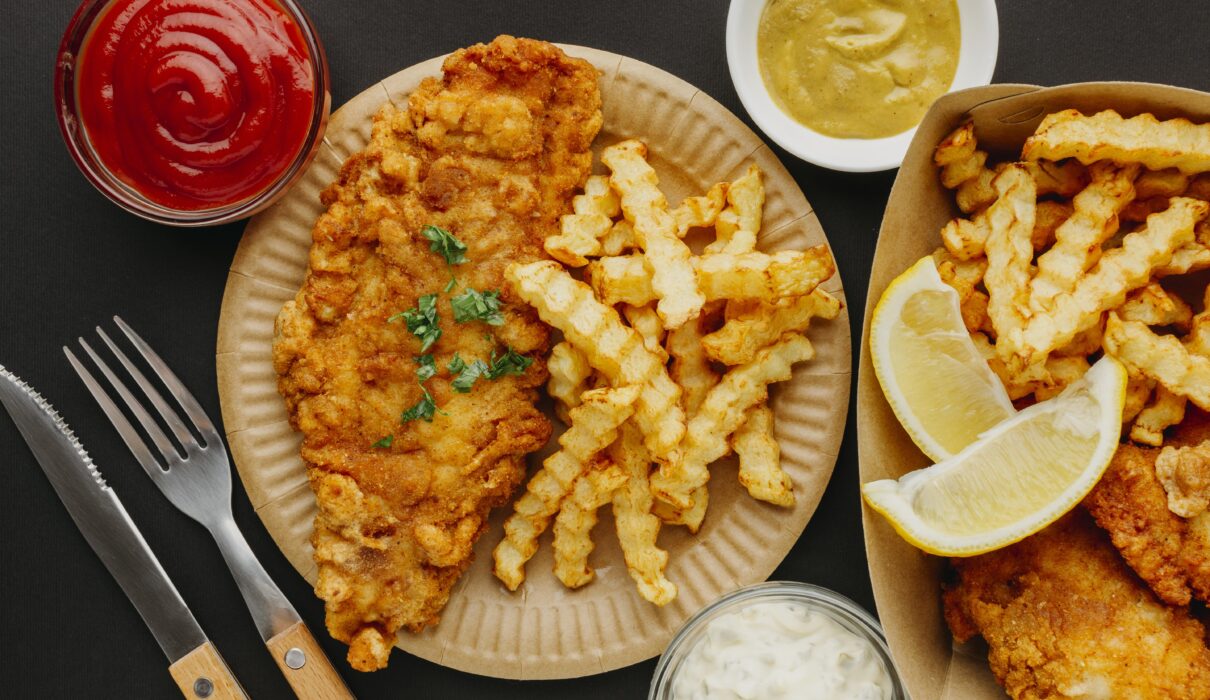
By Before the mid-19th century, the British diet was largely divided by geography: those by the coast ate fish, and those in the north ate fried potatoes. However, around 1860, a culinary collision occurred that would create the most famous double-act in food history. While the exact “inventor” is still debated between Joseph Malin in London and John Lees in Lancashire, 1860 stands as the year this humble combination began its journey to becoming the national soul food of Britain.
A Fusion of Immigrant Cultures
What many don’t realize is that “Fish and Chips” is a beautiful example of early globalization. The tradition of frying fish in batter was actually brought to England by Sephardic Jewish refugees from Spain and Portugal in the 17th century. Meanwhile, the idea of deep-frying “chipped” potatoes was likely inspired by French or Belgian techniques. In 1860, these two migrant traditions finally met, creating a high-calorie, affordable meal that was perfect for the hungry workers of the Industrial Revolution.
Fueling the Industrial Revolution
The timing of this food trend was no accident. The 1860s saw the rapid expansion of the British railway network, which allowed fresh fish to be transported from the icy waters of the North Sea to the smog-filled streets of London and Manchester overnight.
- The Working Man’s Feast: For the first time, factory workers had access to hot, nutritious protein that didn’t cost a fortune.
- The Newspaper Wrap: Because it was sold as a “takeaway” food long before the term existed, it was wrapped in old newspapers to keep it warm and soak up the oil—a tradition that lasted well into the late 20th century.
A Symbol of National Resilience
The impact of the 1860 breakthrough went far beyond the dinner table. Fish and Chips became so vital to British morale that during both World Wars, it was one of the few foods that was never rationed. The government feared that losing the “Friday night chippy” would be a crushing blow to the spirit of the nation. It was the comfort food that kept the country going during its darkest hours.
The Legacy Today
Walking into a British “Chippy” today is like stepping back into that 1860s spirit. The sound of the fryer, the scent of malt vinegar, and the ritual of the wooden fork are all part of a 160-year-old tradition. It remains a democratic dish—enjoyed by everyone from dockworkers to the Royal Family. 1860 wasn’t just the birth of a recipe; it was the birth of a cultural icon that defined the British identity.
“Fish and chips helped win the war, but it was the railways and the year 1860 that won the hearts of the British people.”
