

 By
By In the heart of every French neighborhood, the smell of toasted butter and caramelizing sugar signals the start of the day. The croissant is not just a breakfast item; it is a masterpiece of French engineering. While it looks simple, the journey from a ball of dough to a shatteringly crisp, golden crescent is a process that requires patience, precision, and a deep respect for tradition.
The Secret of Lamination
The true “art” of the French croissant lies in a technique called lamination. This is the rhythmic process of folding high-quality, cold butter into a lean yeast dough.
- The Honeycomb Interior: A master baker aims for exactly 55 delicate layers. When the heat of the oven hits the butter, it creates steam, puffing the dough upward to create the iconic “alveolage” (the airy, honeycomb-like structure) inside.
- The Shatter Factor: A perfect croissant should “shatter” when you bite into it. If it’s soft like bread, it’s a brioche; if it’s greasy, the butter was too warm. The art is in the crunch.
The Importance of “Beurre Charentes-Poitou”
In France, the ingredients are the stars of the show. Most artisan bakers use a specific type of high-fat, fermented butter from the Charentes-Poitou region. This butter has a higher melting point, which allows the baker to fold it into thinner layers without it melting into the dough, resulting in that distinct, nutty aroma that defines a Parisian morning.
Croissant Ordinaire vs. Croissant au Beurre
When you walk into a French boulangerie, you will often see two types of croissants. Understanding the difference is part of the local food culture:
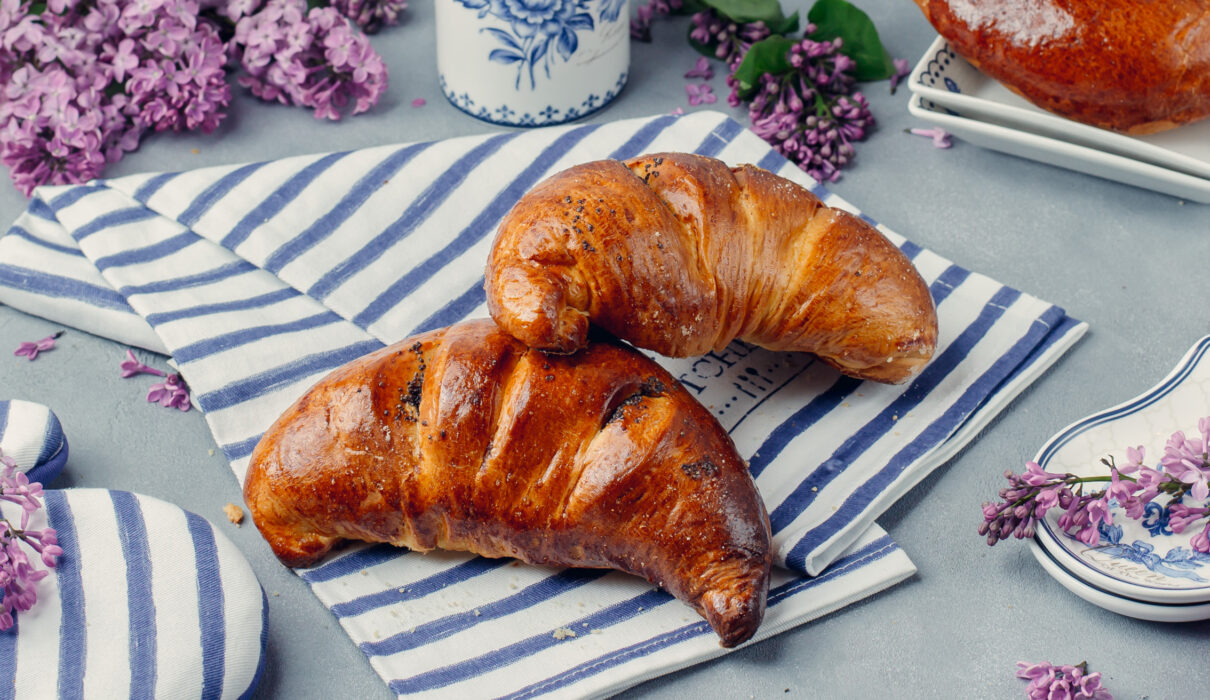
- The Straight Shape (Au Beurre): These are made with 100% pure butter. They are richer, flakier, and considered the gold standard of the craft.
- The Curved Shape (Ordinaire): These are often made with margarine or a blend of fats. In the world of French pastry art, the straight croissant is usually the sign of a premium, artisan product.
The Ritual of the First Bite
To experience the art of the croissant like a local, you must eat it fresh—ideally within three hours of leaving the oven. In France, it is rarely eaten with jam or butter on top; the pastry is already so rich that it stands alone. It is designed to be pulled apart by hand, layer by layer, and perhaps dipped quickly into a bowl of black coffee or grand crème.
“A great croissant is a symphony of textures: a brittle, caramelized shell that hides a cloud of butter-scented air.”
