

 By
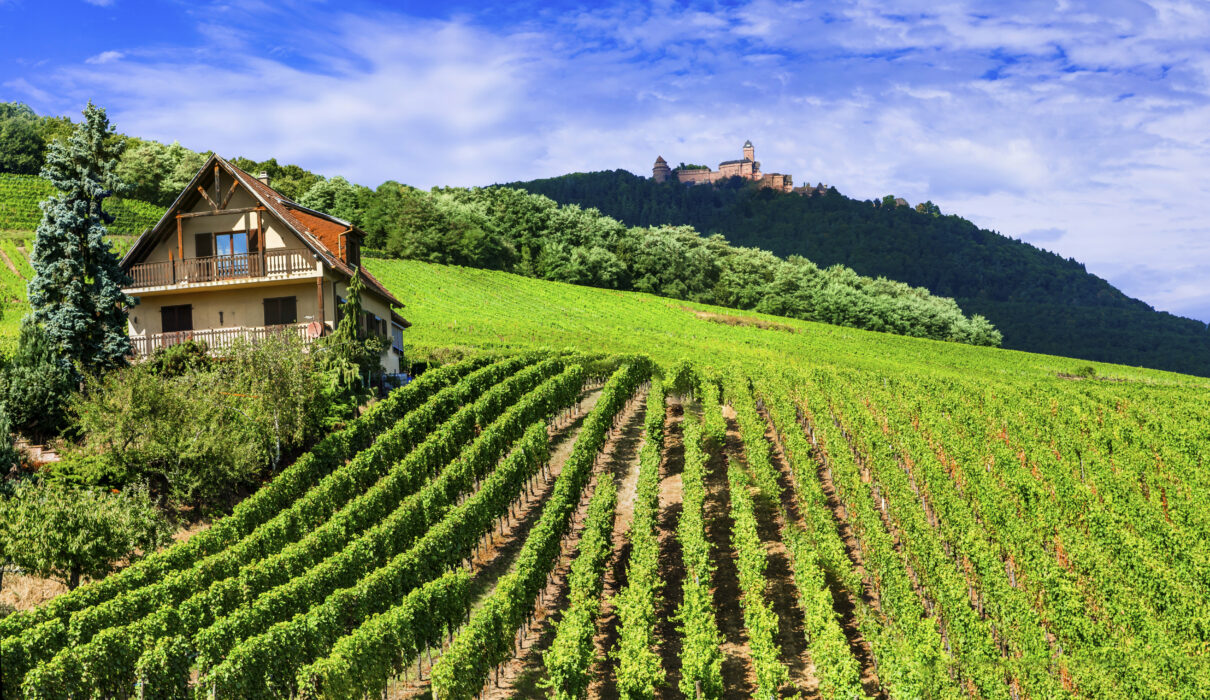
By In 2026, the Alsace Wine Route remains France’s oldest and most enchanting wine trail, winding through 170 kilometers of vine-covered hills. While the medieval charm is timeless, the 2026 season brings a focus on “Green Tourism,” with expanded electric shuttle networks and a surge in biodynamic vineyard experiences.
For a perfect weekend, focus on the heart of the route between Colmar and Sélestat.
Saturday: The Medieval Pearls
Start your journey in Colmar and head north. This section features some of the “Most Beautiful Villages of France” clustered just minutes apart.
- Eguisheim: Begin here early to walk the concentric, rose-filled streets. In 2026, it remains the gold standard for medieval urban planning.
- Riquewihr: Known as the “Gem of the Vineyards,” this fortified village looks exactly as it did in the 16th century.
- Kaysersberg: Voted a national favorite, it features a fortified bridge and a ruined castle. It is the ideal spot for a traditional Winstub lunch of Choucroute or Tarte Flambée.
Sunday: Castles and Grand Crus
Head further north toward the dramatic foothills of the Vosges Mountains for a mix of history and high-end viticulture.
- Ribeauvillé: This “City of Fiddlers” is overlooked by three hilltop castles. If you have two hours, the “Three Castles Trail” offers a panoramic view that reaches the Black Forest.
- Château du Haut-Kœnigsbourg: Drive up to this massive red-sandstone fortress. In 2026, the castle has introduced new interactive digital guides that bring its 900-year history to life.
- Bergheim: End your trip in this quieter, perfectly preserved walled town. Its “Witches’ Walk” along the ramparts offers a peaceful final view of the sunset over the vines.
Top Wineries for your 2026 Visit
In 2026, most top estates require online booking at least one week in advance for formal tastings.
- Famille Hugel (Riquewihr): A 13-generation legend famous for their yellow labels and historic 16th-century cellars.
- Maison Trimbach (Ribeauvillé): The gold standard for dry Riesling; their “Clos Sainte Hune” is world-renowned.
- Domaine Weinbach (Kaysersberg): Located in a former Capuchin monastery, offering incredible biodynamic white wines.
- Maison Zeyssolff (Gertwiller): New for 2026, they offer an immersive “Sensorial Tasting” with a 180° film projection inside their historic cellar.
2026 Travel Logistics
- The Drive: Rental cars in 2026 average €50–€80 per day. The route has seen a 40% increase in EV charging stations, making it an ideal “Green Drive.”
- Kut’zig Bus: If you prefer not to drive, the Kut’zig (an open-top hop-on hop-off bus) runs from Colmar through the main villages. In 2026, the daily pass is €29.
- Major Event: If your weekend falls on September 6, 2026, you will experience the Pfifferdaj (Fiddlers’ Festival) in Ribeauvillé—a massive medieval parade that has been a tradition for over 600 years.
“In 2026, the Alsace Wine Route is more than a road; it is a time machine where the 16th century meets 21st-century sustainability, one glass of Riesling at a time.”
