

 By
By In 2026, Saadiyat Island’s Cultural District has officially ascended to the throne of the global art world. What was once a visionary master plan is now a physical reality of soaring steel, “floating” rain of light, and ancient history.
This is your guide to the most prestigious museum row on the planet for the 2026 season.
The Louvre Abu Dhabi: The Floating Icon
As it enters its ninth year of operation, the Louvre Abu Dhabi remains the anchor of the district. In 2026, the museum has expanded its “Universal History” mission with new long-term loans from major French institutions.
- The Dome Experience: The “Rain of Light” created by Jean Nouvel’s 7,850-star geometric dome is now accessible by electric kayak tours at night, allowing you to paddle under the museum’s architecture under the moonlight.
- 2026 Special Exhibition: The museum is currently hosting a landmark cross-cultural exhibition titled Silk Roads of the Future, connecting ancient trade artifacts with 21st-century digital art.
- Children’s Museum: A fully interactive space that, in 2026, uses haptic technology to allow children to “touch” replicas of world-famous sculptures.
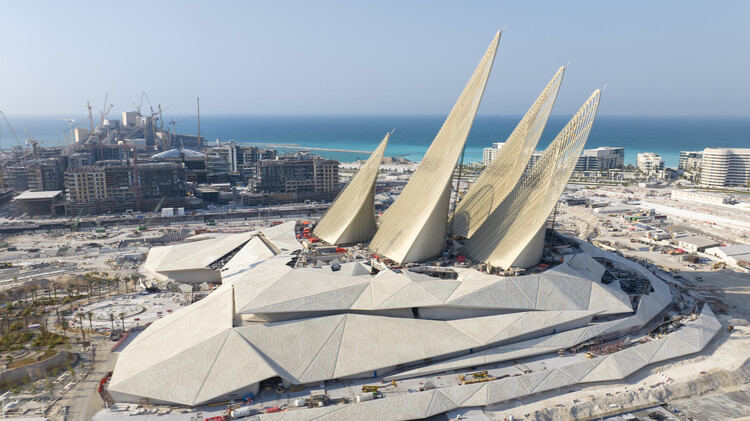
The Zayed National Museum: The Winged Centerpiece
Opening its doors fully to the public in the 2025–2026 window, the Zayed National Museum is the soulful heart of the row. Designed by Lord Norman Foster, its five towering steel wings mimic the feathers of a falcon.
- The Narrative: This is the definitive place to understand the life of Sheikh Zayed bin Sultan Al Nahyan and the lightning-fast unification of the UAE.
- The Hanging Gardens: The museum is surrounded by a lush landscape that demonstrates traditional Aflaj (irrigation) systems, providing a cool microclimate for outdoor walks even in the warmer months of 2026.
Guggenheim Abu Dhabi: The Grand Scale
By 2026, the Frank Gehry-designed Guggenheim Abu Dhabi has become the largest of the Guggenheim outposts. Its chaotic, beautiful cluster of cones and cubes dominates the Saadiyat skyline.
- Global Contemporary Art: Unlike its New York counterpart, this museum focuses heavily on art from West Asia, North Africa, and South Asia.
- The Cones: Inside the massive plaster-and-steel cones, you will find site-specific installations that are too large for almost any other gallery in the world. In 2026, the inaugural “Grand Atrium” installation features a suspended light forest by teamLab.
teamLab Phenomena Abu Dhabi
Newly completed for the 2026 season, teamLab Phenomena is a “home for environmental phenomena.” This is not a traditional museum but a massive, 17,000-square-meter sensory experiment.
- The Concept: The artworks here are not static; they change based on the humidity, temperature, and the number of people in the room.
- Visitor Tip: Wear white clothing to act as a canvas for the digital projections that will crawl across your body as you move through the “Infinite Crystal Universe.”
Natural History Museum Abu Dhabi
Opening as the final major piece of the 2026 puzzle, this museum takes visitors back 13.8 billion years.
- “Stan” the T-Rex: The world-famous, 67-million-year-old Tyrannosaurus rex skeleton is the star attraction here.
- The Murchison Meteorite: You can view a fragment of the 7-billion-year-old meteorite that crashed in Australia, containing stardust that predates our own solar system.
2026 Visitor Logistics
- The Culture Pass: In 2026, Abu Dhabi launched the “Saadiyat One” digital pass, which provides seamless entry to all museums and includes a ride on the autonomous electric shuttles that circle the district.
- Timing: To avoid the 2026 crowds, visit the Zayed National Museum in the morning (10:00 AM) and end your day at the Louvre for sunset views over the Arabian Gulf.
- Stay: Luxury “Art Hotels” like the St. Regis and Park Hyatt now offer curated “Behind the Scenes” museum packages for guests.
“On Museum Row in 2026, the conversation is no longer about East vs. West. It is about a single, shared human story told through the most ambitious architecture of our time.”
