

 By
By In 2026, the battle for “authentic” paella in Valencia is fiercer than ever. While the world often thinks of paella as a seafood dish, any true Valencian will tell you that the Original Paella Valenciana comes from the land, not the sea. It was born in the rice paddies of the Albufera as a humble field-worker’s lunch.
As of March 20, 2026, Valencia is buzzing with the energy of the Fallas festival, making it the most competitive time of year to find an authentic table.
The “Ten Commandment” Ingredients
To be considered auténtica by the Consejo Regulador (Regulatory Council) in 2026, the recipe must strictly contain these ten ingredients:
- Rice: Specifically Arroz de Valencia (Bomba or Senia varieties).
- Chicken: Chopped into small, bone-in pieces.
- Rabbit: Essential for the gamey depth of the broth.
- Bajoqueta: Flat, wide green beans.
- Garrofó: A large, creamy white lima bean native to the region.
- Tomato: Grated and sautéed into a sofrito.
- Extra Virgin Olive Oil.
- Saffron: Never food coloring (yellow dye is for tourists).
- Water: Valencian tap water is high in calcium, which locals swear affects the rice’s texture.
- Salt.
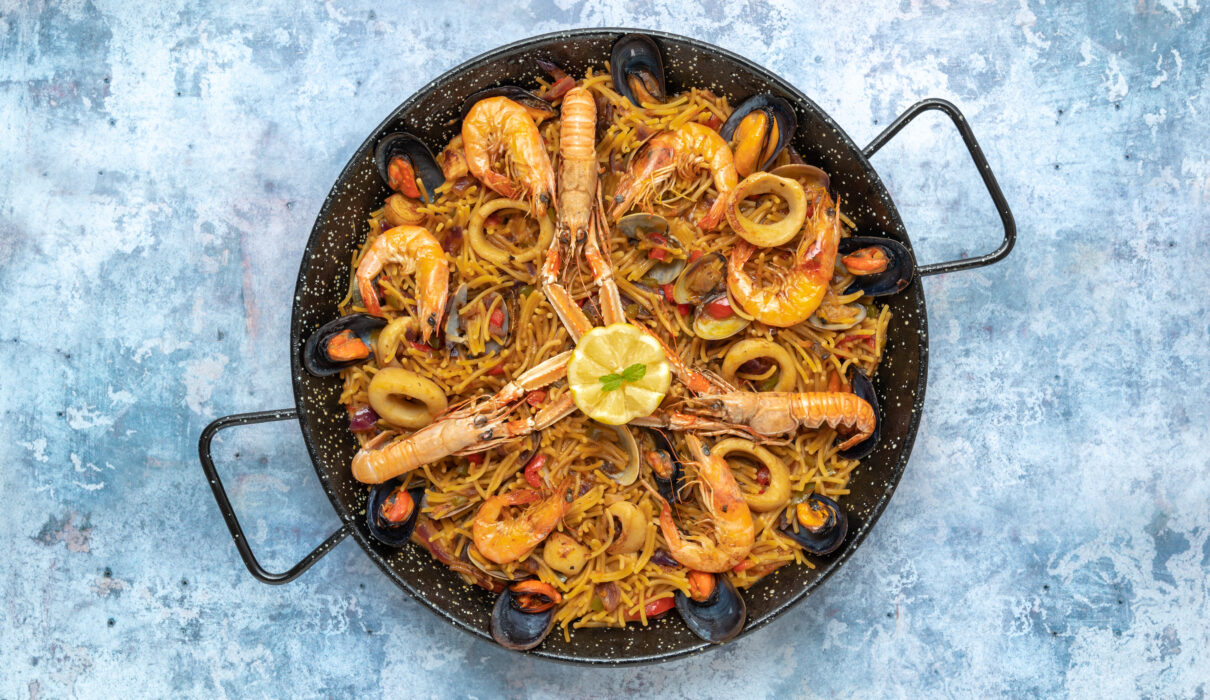
The Controversial “Extras”: Snails (vaquetes), a sprig of rosemary, and artichokes (only when in season) are the only widely accepted additions. If you see peas, chorizo, or shrimp, it is legally “Arroz con cosas” (Rice with things), not Paella Valenciana.
The 2026 Secret: The Fire & The Crust
The soul of a 2026 paella isn’t just the ingredients; it’s the chemistry of the cook.
- Orange Wood Fire: The best restaurants in 2026 still use orange tree wood. The smoke infuses the rice with a subtle citrus aroma that a gas burner cannot replicate.
- The Socarrat: This is the “Holy Grail”—the toasted, caramelized layer of rice at the bottom of the pan. In 2026, a chef’s skill is judged solely on the quality of the socarrat.
- No Stirring: Once the rice is spread, it is never touched. Stirring releases starch and turns the dish into a mushy risotto, which is a cardinal sin in Valencia.
Where to Eat the Real Deal in 2026
- Casa Carmela: Located by Malvarrosa beach. In 2026, you still need to book 2–3 weeks in advance. They cook exclusively over orange wood.
- Restaurante Levante: Hailed by locals as the “Home of the Best Paella.” It’s tucked away from the beach crowds and focuses on the pure, meat-heavy original recipe.
- Bon Aire (El Palmar): Located in the Albufera marshlands. The 2026 “insider” move is to take a boat ride through the rice fields before eating at this award-winning spot.
2026 Etiquette: The Unwritten Rules
- Lunch Only: Paella is a heavy, starch-rich meal designed for energy. Eating it for dinner is a massive red flag that you’re in a tourist trap.
- The Wooden Spoon: In traditional settings, paella is eaten directly from the pan using a flat wooden spoon, starting from the edge and working toward the center.
- The “Lemon” Warning: If a restaurant serves paella with a lemon wedge, it’s often to mask dry rice. Use it sparingly, or not at all, to respect the chef’s seasoning.
“Paella isn’t a recipe; it’s a technical exercise in patience. In 2026, it remains the only dish in the world where the most delicious part is the bit that almost got burnt.”
