

 By
By If you walk through the center of Toulouse at sunset, the answer becomes literal. Known affectionately as La Ville Rose, France’s fourth largest city radiates a warm, terracotta glow that sets it apart from the pale limestone of Paris or the white stone of Bordeaux.
Here is the secret behind the rosy hue of the Occitan capital.
1. The Necessity of Clay
The “Pink City” was born out of geological necessity. Unlike other regions of France that are rich in building stone, the plains surrounding Toulouse are composed of deep layers of alluvial clay deposited by the Garonne River.
- Roman Roots: When the Romans founded the city of Tolosa in the 1st century, they realized that transporting stone from the distant Pyrenees was too expensive. Instead, they used the iron rich clay found right under their feet.
- The “Brique Foraine”: They created a unique, oversized, flat brick known as the brique foraine. When fired, the high iron content in the clay turns a range of colors from soft salmon and apricot to a deep, burnt orange.
2. The Golden Age of Pastel
While the bricks provided the structure, it was a tiny blue plant that provided the wealth to build the city’s grandest “pink” monuments.
- The Blue Wealth: In the 15th and 16th centuries, Toulouse became the European center for Pastel (woad), a plant used to create a vibrant blue dye.
- The Renaissance Mansions: The “Pastel Barons” became fabulously wealthy and competed to build the most magnificent hôtels particuliers (private mansions). They used the traditional pink brick but adorned them with intricate Renaissance carvings. The Hôtel d’Assézat remains the crown jewel of this era.
3. The Sunset Magic: “La Magie Rose”
The nickname “La Ville Rose” is actually a relatively modern marketing stroke, first appearing in tourist brochures in the early 20th century. However, it perfectly describes the city’s optical illusions.
- The Morning: The bricks appear as a soft, pale blush.
- The Midday: Under the harsh southern sun, they can look almost orange or bright red.
- The Twilight: This is when the “magic” happens. As the sun sets over the Garonne, the buildings turn a deep mauve and purple, reflecting the light in a way that feels almost cinematic.
4. Preserving the Glow in 2026
In 2026, Toulouse takes its color very seriously.
- The Color Chart: The city maintains an official “Color Chart” that any new construction or restoration must follow. You cannot simply paint a building any shade of red; it must harmonize with the historical terracotta palette.
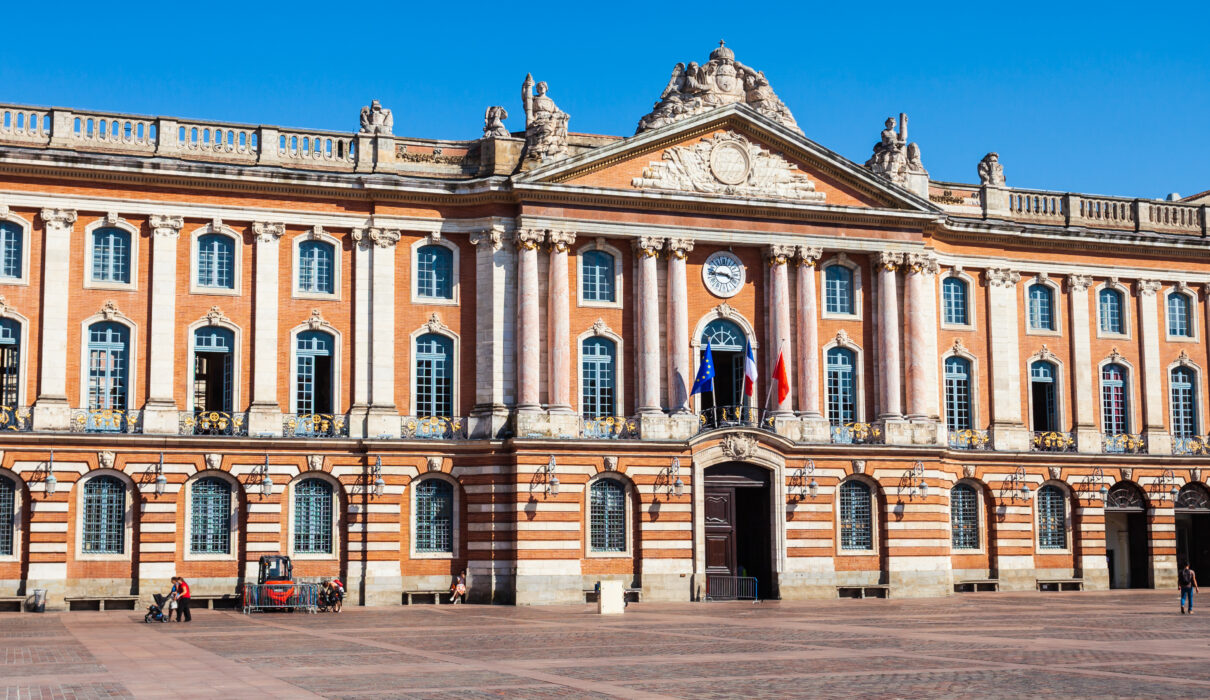
- UNESCO Heritage: Landmarks like the Basilica of Saint Sernin (the largest Romanesque building in Europe) and the Capitole (City Hall) are meticulously cleaned using techniques that preserve the natural “crust” of the ancient bricks.
📍 Three Spots to See the “Pinkest” Views
- Pont Neuf: Stand on this 16th century bridge at 8:00 PM in the summer to see the entire riverfront glow.
- Place du Capitole: The massive facade of the City Hall is the most iconic concentration of pink brick and white marble in the city.
- Couvent des Jacobins: A 13th century Gothic masterpiece built entirely of brick, featuring a stunning “palm tree” column inside.
“In Toulouse, the walls don’t just hold up roofs; they hold the warmth of the sun long after it has set.”
